

Why Does Shower Water Cause Dry Skin? (The Australian Guide)
If your skin feels tight and itchy after every shower, you're not imagining it. More than 2.8 million Australians have eczema at any given time, according to Eczema Support Australia's 2023 evidence report. Many assume their moisturiser or body wash is the problem. But the real culprit may be the water itself. Your shower water carries chlorine, chloramines, and hard water minerals that work against your skin every single day. This guide explains exactly what those chemicals do, why hot water makes things worse, and what practical steps you can take starting tonight.
Key Takeaways
- Australian tap water contains chlorine and chloramines that strip your skin's natural protective barrier.
- Hot water (41°C) increases skin water loss by 127% compared to cool water, per a 2022 Journal of Clinical Medicine study (Proksch et al.).
- Flowy's dual-stage filtration — KDF-55 and calcium sulfite — is designed specifically for hot shower water.
- Perth and Brisbane have the hardest tap water of any Australian capital, which may worsen dry hair and skin.
Jump to a section:
- What's Actually in Your Shower Water?
- Chlorine's Effect on Your Skin Barrier
- Why Does Hot Water Make Dry Skin Worse?
- Hard Water and Hair: What the Research Shows
- Is Your Shower Water Making Your Eczema Worse?
- What Can You Do? (Practical Fixes)
- Frequently Asked Questions
What's Actually in Your Shower Water?
Australian tap water is safe to drink, but it's not neutral for your skin. Chlorine levels vary significantly across Australian cities — Brisbane and South-East Queensland averages 1.20 mg/L of free chlorine, the highest of any major Australian city, according to WaterScore Australia's February 2026 report. Sydney sits at 0.66 mg/L, Adelaide at 0.79 mg/L, and Melbourne at 0.57 mg/L. These are well under the NHMRC's health-based ceiling of 5 mg/L, but that limit is designed for drinking, not daily skin exposure.
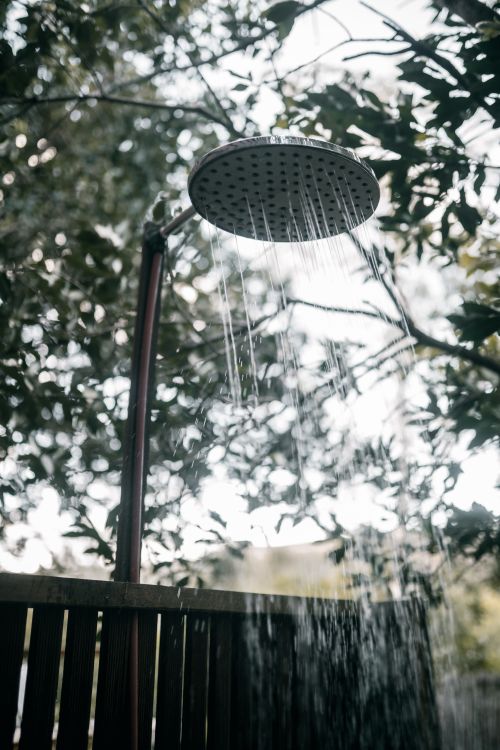
Beyond free chlorine, many Australian systems also use chloramines. Sydney Water confirms it uses chloramine in extended distribution zones (source). SA Water states that over 220,000 South Australians receive chloraminated water (source). Chloramines are harder to remove than free chlorine alone and persist further into distribution networks.
Hard water minerals are the third factor. Perth tap water measures approximately 179 mg/L CaCO3, classified as "Hard" and the highest of any Australian capital. Brisbane sits at around 100 mg/L (moderately hard), while Sydney (43 mg/L) and Melbourne (30 mg/L) are comparatively soft, according to WaterScore Australia combined with NHMRC Drinking Water Guidelines data.
So every morning, your skin is exposed to a combination of oxidising agents (chlorine, chloramines) and mineral deposits (calcium, magnesium). Neither is designed with your skin barrier in mind.
Citation capsule: Australian tap water free chlorine averages range from 0.57 mg/L in Melbourne to 1.20 mg/L in Brisbane/SEQ, well below the NHMRC's 5 mg/L health guideline but significant for daily skin exposure. Sydney Water and SA Water both confirm chloramine use in parts of their distribution networks. Source: WaterScore Australia, February 2026; Sydney Water; SA Water.
Chlorine's Effect on Your Skin Barrier
Chlorine is an oxidising agent. Its job in water treatment is to destroy microorganisms by breaking down their cell membranes. Unfortunately, it doesn't distinguish between bacteria and the lipid layer protecting your skin. When you shower, chlorine and chloramines come into direct contact with your acid mantle, which is the thin, slightly acidic film that sits on your skin's surface and keeps moisture in.
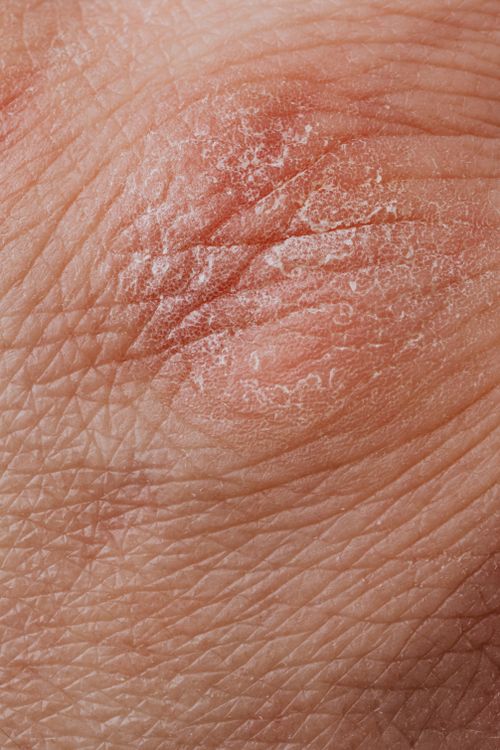
The acid mantle depends on a carefully balanced mix of sebum, sweat, and naturally occurring fatty acids. Chlorine oxidises those fatty acids. Over time, this strips the lipid barrier, leaving skin more permeable. Moisture escapes more easily. Irritants from the environment get in more easily. The result is the tight, dry, sometimes itchy feeling many people notice within minutes of stepping out of the shower.
This isn't a dramatic allergic reaction. It's a slow, cumulative process that happens every time you shower. A single exposure is unlikely to cause visible damage. Daily exposure over months and years is a different story.
Our finding: When you apply a nourishing body wash in chlorinated water, the chlorine strips the skin's lipid layer at the same time the product is trying to support it. Changing your products without addressing the water is working against yourself.
Citation capsule: Chlorine and chloramines in shower water act as oxidising agents that break down the lipid-rich acid mantle protecting the skin. This mechanism, repeated daily, progressively weakens the skin's moisture barrier, increasing transepidermal water loss and sensitivity to environmental irritants. Source: based on established dermatological science reviewed in Proksch et al. (2022), Journal of Clinical Medicine.
Why Does Hot Water Make Dry Skin Worse?
A 2022 study published in the Journal of Clinical Medicine put numbers to what many people already sense. After a 10-minute immersion in hot water at 41°C, transepidermal water loss (TEWL) jumped from 25.75 to 58.58 g/h/m2, a 127% increase. The same exposure in cold water (11°C) raised TEWL by only 36%. The researchers concluded that "long and continuous water exposure damages skin barrier function, with hot water being even more harmful." (Proksch et al., 2022, Journal of Clinical Medicine, 11(2):298.)
TEWL simply measures how fast water evaporates from your skin into the surrounding air. Think of it as your skin's moisture leak rate. When TEWL is low, your barrier is holding. When it's high, your skin is losing moisture faster than it can replenish, and a 127% jump over a single 10-minute shower isn't a rounding error. That's meaningful, repeated damage to the same barrier that keeps your skin soft and your irritant defences intact.
The combination effect is where things get problematic for many Australians. Hot water opens the pores, increases TEWL, and at the same time exposes the skin to chlorine and hard minerals. Each factor amplifies the other. Shorter, cooler showers aren't about discomfort. They're about giving your skin barrier a fighting chance to recover.
Citation capsule: Research from Proksch et al. (2022) in the Journal of Clinical Medicine found that hot water at 41°C increased transepidermal water loss by 127% after a 10-minute immersion, compared to a 36% increase with cold water at 11°C. The study concluded that hot water is significantly more damaging to the skin barrier than cold water, even over short exposures.
Hard Water and Hair: What the Research Shows
Hard water can affect your hair's structural strength. A 2018 study in the International Journal of Trichology exposed 70 healthy males to water with 486.7 mg/L CaCO3 for three months. The hard water group showed significantly reduced hair tensile strength: 234.16 compared to 255.49 in the control group (p=0.001). (Garg et al., 2018.) That water was considerably harder than typical Australian levels, but the mechanism is relevant across the spectrum.
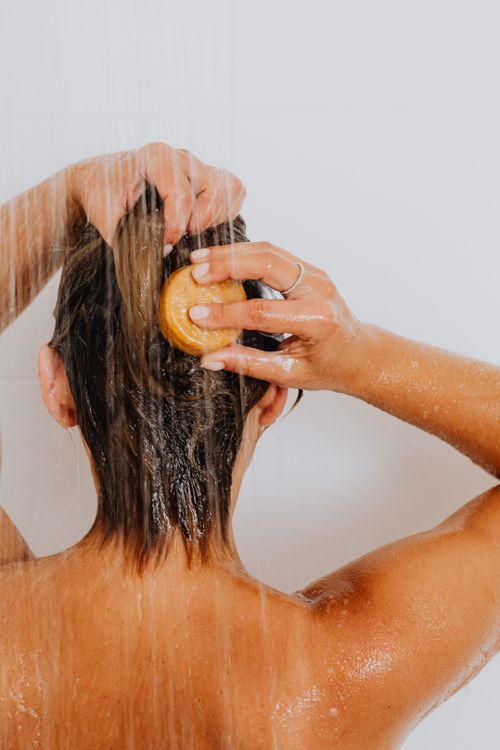
Here's what happens: calcium and magnesium ions in hard water bind to hair proteins, particularly keratin, and form a film on the hair shaft. This film makes hair feel rough and brittle. It also makes the hair shaft swell slightly, which roughens the cuticle. That rough cuticle is why your hair looks dull and why conditioner seems to stop working as well. The minerals are coating the shaft before the conditioner even gets a chance to absorb.
Perth (approximately 179 mg/L CaCO3) and Brisbane (approximately 100 mg/L CaCO3) sit in the "Hard" and "Moderately Hard" classification zones respectively. If you live in either city and notice your hair feeling drier or more brittle than usual, your water hardness is a plausible contributing factor, not just your shampoo or styling products.
Citation capsule: Garg et al. (2018) in the International Journal of Trichology found that three months of exposure to hard water (486.7 mg/L CaCO3) significantly reduced hair tensile strength to 234.16, compared to 255.49 in the control group (p=0.001). Perth tap water at approximately 179 mg/L CaCO3 is the hardest of any Australian capital city. Sources: Garg et al. (2018); WaterScore Australia + NHMRC Drinking Water Guidelines.
Is Your Shower Water Making Your Eczema Worse?
For the estimated 2.8 million Australians living with eczema, water chemistry deserves serious attention. A 2022 UK Biobank cohort study of 306,531 adults found that for every 50 mg/L increase in water hardness, the odds of eczema rose by 2%. Adults in areas with hardness above 200 mg/L had 12% higher eczema odds compared to those in soft-water areas. (Lopez et al., 2022, British Journal of Dermatology, 187(5):704.) Water hardness doesn't cause eczema, but it may contribute to flare-ups in people who are already prone to it.
Typical Australian hardness levels sit well below the 200 mg/L threshold in this study. Perth (approximately 179 mg/L) comes closest, and for people with sensitive or eczema-prone skin, moderately hard water may be one contributing factor alongside detergents, temperature, and other triggers.
Children are particularly affected. A 2023 study in the Australasian Journal of Dermatology across four South-Eastern Australia cohorts found current eczema in 16.7-26.6% of children under six, and 8.5-8.8% of adults in their early fifties. (Zeleke et al., 2023.) If you or your child experiences flare-ups that seem to follow showers, the water itself is worth examining alongside detergents, fabric softeners, and other contact factors.
What Flowy customers with sensitive skin noticed
"I love the feeling of softer skin and hair after using Flowy's filtered shower head. I have eczema sometimes and it can irritate my skin. Since switching, I've noticed softer skin and less scalp itchiness."
"Before Flowy my hair was dry, brittle and falling out all over the place. I felt like my conditioner did nothing to help! Washing my face made my eyes itch and the water literally felt hard! Already my hair feels softer and my eyes don't itch from the water anymore."
"Since changing over to the Flowy shower head my rashes have started to disappear and my hair feels sooooo much better! I didn't even consider shower water to be a factor!"
"I have come from using tank water into town water where the chlorine is very strong and damaging to the skin and hair. Flowy has definitely helped to take away the severity of the chlorine and those other nasties. There is a big difference."
Citation capsule: The 2022 UK Biobank cohort study (n=306,531) published in the British Journal of Dermatology found that each 50 mg/L increase in water hardness was associated with a 2% increase in eczema odds. Adults in hard-water areas above 200 mg/L had 12% higher eczema odds versus soft-water areas. (Lopez et al., 2022, British Journal of Dermatology, 187(5):704.)
What Can You Do? (Practical Fixes)
The most impactful change you can make is filtering your shower water to remove chlorine and chloramines. The two filtration media proven effective in hot shower water are KDF-55 and calcium sulfite — the only media that work at shower temperatures. Other approaches (such as carbon block or inline attachments) are largely ineffective once water exceeds around 38°C. If your water supply uses chloramines, as Sydney's extended zones and parts of South Australia do, your filter technology matters even more.
Here are four practical steps you can take, in order of impact:
1. Filter your shower water. A KDF-55 and calcium sulfite filter addresses the root cause — chlorine and chloramines — using the only two media proven effective in hot water. Flowy's filtered showerhead integrates dual-stage filtration directly into the showerhead, no adapters or separate attachments needed.
2. Lower your shower temperature. The Proksch et al. (2022) TEWL data shows a 127% increase in moisture loss at 41°C. Dropping your shower to a warm-but-not-hot temperature (around 36-37°C) reduces that impact meaningfully. Your skin will feel different within a week.
3. Shorten your shower duration. The same study found that damage compounds with duration. If you can cut your shower to under eight minutes, you give your skin barrier significantly less exposure to both heat and water chemistry.
4. Moisturise within three minutes of stepping out. Apply a fragrance-free moisturiser to slightly damp skin immediately after drying. This helps seal in remaining moisture before the barrier fully resets.
Our observation: Many people notice a difference in skin feel within the first week of switching to filtered, cooler showers. Not because anything in their skincare routine changed, but because the barrier finally gets a chance to stay intact through a full 24-hour cycle.
Real Flowy customer review
More from the Flowy community
"From the first shower I noticed the water feels softer, less harsh on my skin, which has helped with those 'today I'm dry and scratchy' days. My hair also seems shinier and less frizzy. It transformed my daily shower from 'meh' to something I actually look forward to."
"I didn't expect a filtered shower head to make such a difference — but it really has. After just a few days I noticed my skin felt less dry, and my hair wasn't as frizzy or weighed down. I didn't realise how harsh my regular tap water was until I made the switch."
"I have very long hair and have been really worried about the dryness and hairfall. I used the Flowy filter shower head and saw results in just 1–2 weeks. The hair is soft and shiny. The whole experience is so much better as the water is filtered and all the chlorine and impurities are out."
"Absolutely love it! Has made such a difference for my hair and skin and makes me feel like I'm at a spa. If you want to do one nice thing for yourself to glow up, this is it!"
Frequently Asked Questions
Does chlorine in shower water cause dry skin?
Chlorine acts as an oxidising agent that breaks down the lipid-rich acid mantle protecting your skin's surface. Daily exposure strips those fats gradually, increasing transepidermal water loss and leaving skin feeling tight or dry. Brisbane/SEQ tap water averages 1.20 mg/L free chlorine, the highest of any Australian capital, per WaterScore Australia (February 2026). KDF-55 and calcium sulfite — Flowy's dual-stage filtration media — are the only approaches proven to work at shower temperatures.
Is Australian tap water safe for showering?
Australian tap water meets the NHMRC's health-based drinking guideline of a maximum 5 mg/L total chlorine, so it's safe by regulatory standards. However, "safe to drink" and "neutral for daily skin exposure" are different things. Chlorine, chloramines, and hard water minerals affect your skin barrier through daily contact. If you have dry or sensitive skin, filtering your shower water is a practical option worth considering.
Why is Perth tap water hard on skin and hair?
Perth tap water measures approximately 179 mg/L CaCO3, the highest of any Australian capital and close to the NHMRC's 200 mg/L scale-formation threshold. Hard water calcium and magnesium ions bind to hair proteins and skin lipids, forming a film that makes both feel rougher and drier. The 2018 Garg et al. study in the International Journal of Trichology found that hard water exposure significantly reduced hair tensile strength (234.16 vs. 255.49 in controls, p=0.001).
Will a shower filter help dry skin in Australia?
A shower filter can help, but the technology matters more than most people realise. KDF-55 and calcium sulfite are the only two filtration media proven effective at shower temperatures — most other approaches, including carbon block and basic inline attachments, lose efficacy once water exceeds around 38°C.
For Australians on chloraminated supply — Sydney's extended distribution zones and parts of South Australia — calcium sulfite is what makes the difference. KDF-55 alone removes the majority of free chlorine but has limited effect on chloramines. A dual-stage filter using both addresses the full picture.
Flowy's filtered showerhead uses both media in a single integrated unit, verified through NATA-accredited Eurofins lab testing. Results vary depending on your water chemistry and existing skin condition, but most customers notice a difference in skin feel within the first week — not because anything in their routine changed, but because the barrier finally gets a chance to stay intact.
How does hot water temperature affect skin dryness?
Hot water at 41°C increases transepidermal water loss (TEWL) by 127% after a 10-minute shower, compared to a 36% increase with cool water at 11°C, according to Proksch et al. (2022) in the Journal of Clinical Medicine. TEWL measures how fast moisture evaporates from your skin. The higher the TEWL, the more your skin barrier is compromised. Reducing shower temperature to around 36-37°C meaningfully reduces that moisture loss.
Conclusion
Your shower is probably the most consistent daily contact your skin has with any substance. Three factors work together to weaken your skin barrier each time: chlorine and chloramines that oxidise the lipid layer, hard water minerals that coat hair and skin, and hot water that drives moisture loss by 127% in a 10-minute window. None of these are alarming on their own. But they compound daily, which helps explain why so many Australians struggle with dryness and irritation despite using quality skincare products.
The good news is that all three are addressable. You don't need to overhaul your entire routine. Start with shower temperature. Shorten your shower time. And if you want to address the water chemistry directly, the only filtration media proven effective at shower temperatures are KDF-55 and calcium sulfite — anything else loses efficacy once water exceeds around 38°C. That matters especially if you're in Sydney's extended network or parts of South Australia, where chloramines are used instead of free chlorine and are significantly harder to remove.
Flowy's dual-stage filter uses both. It integrates directly into the showerhead — no adapters, no separate attachments, installs in under two minutes. And with independent NATA-accredited Eurofins lab testing behind the filtration claims, it's the only filtered showerhead in Australia built specifically around what's actually in your water.
Want to see what filtered shower water feels like from day one? Try Flowy risk-free for 60 days →
About the Author
Flowy is an Australian filtered showerhead brand built on independently verified filtration data. All filtration performance claims are backed by NATA-accredited independent lab testing through Eurofins Australia. Water quality figures cited in this article are sourced from Australian government guidelines, state utility providers, and peer-reviewed literature — not US EPA standards or self-reported data.
This article is for informational purposes only and does not constitute medical advice. If you have a skin or medical condition, consult a qualified healthcare professional.
Performance claims are based on NATA-accredited independent lab testing.
Sources
- NHMRC, "Australian Drinking Water Guidelines - Chlorine," retrieved 2026-06-09, https://guidelines.nhmrc.gov.au/australian-drinking-water-guidelines/part-5/physical-chemical-characteristics/chlorine
- WaterScore Australia, "Chlorine in Australian Tap Water: Should You Filter It?", February 2026, retrieved 2026-06-09, https://waterscore.com.au/articles/chlorine-in-australian-tap-water/
- Melbourne Water, "Drinking Water Treatment," retrieved 2026-06-09, https://www.melbournewater.com.au/water-and-environment/water-management/water-quality/water-treatment
- Sydney Water, "Safe Drinking Water," retrieved 2026-06-09, https://www.sydneywater.com.au/water-the-environment/how-we-manage-sydneys-water/safe-drinking-water.html
- SA Water, "Disinfecting Your Drinking Water," retrieved 2026-06-09, https://www.sawater.com.au/water-and-the-environment/safe-and-clean-drinking-water/disinfecting-your-drinking-water
- NHMRC, "Australian Drinking Water Guidelines - Hardness as Calcium Carbonate," retrieved 2026-06-09, https://guidelines.nhmrc.gov.au/australian-drinking-water-guidelines/part-5/physical-chemical-characteristics/hardness-as-calcium-carbonate
- Proksch E et al. (2022), "Impact of Water Exposure and Temperature Changes on Skin Barrier Function," Journal of Clinical Medicine, 11(2):298, https://pmc.ncbi.nlm.nih.gov/articles/PMC8778033/
- Lopez D et al. (2022), "Hard water and atopic eczema: a population-based study from the UK Biobank," British Journal of Dermatology, 187(5):704, https://pmc.ncbi.nlm.nih.gov/articles/PMC9804584/
- Eczema Support Australia, "The Burden of Eczema - Evidence for a National Strategy," 2023, https://www.eczemasupport.org.au/wp-content/uploads/2023/08/The-Burden-of-Eczema-Evidence-for-a-National-Strategy.pdf
- Zeleke B et al. (2023), "Epidemiology of eczema in South-Eastern Australia," Australasian Journal of Dermatology, https://pmc.ncbi.nlm.nih.gov/articles/PMC10952653/
- Garg S et al. (2018), "Effect of Hard Water on Hair," International Journal of Trichology, 10(3):113-117, https://pmc.ncbi.nlm.nih.gov/articles/PMC6028999/